How To Resolve Universal Travel Adapter Blowing Fuses?
You are traveling abroad, and suddenly your adapter stops working. You check your device, and everything seems fine. The problem? A blown fuse inside your universal travel adapter.
This is more common than most travelers realize, and the good news is that it is usually fixable.
A blown fuse is a symptom, not the root cause. Something caused it to blow, and figuring out what happened is just as important as replacing the fuse itself.
Most universal travel adapters change the plug shape to fit different wall sockets. They do not convert voltage, and many offer zero overload protection. This makes understanding fuse issues even more critical for safe travel.
In this guide, you will learn exactly why fuses blow in universal travel adapters. You will also get clear, step-by-step instructions on how to replace a blown fuse safely.
Let’s get started so you can get back to charging your devices safely.
In a Nutshell
- A blown fuse is a symptom. Something caused it to blow, and replacing the fuse without finding that cause means it will likely blow again.
- Universal travel adapters only change plug shape. They do not convert voltage, so using the wrong voltage device is a common reason fuses fail.
- Replacing the fuse is straightforward. You pry open the fuse holder, swap in the same-rated fuse, and test the adapter before using it again.
- Never install a higher-rated fuse. This removes the only safety protection your adapter has and creates a serious fire risk.
- If the fuse blows again immediately, stop using the adapter. Repeated failures signal an unsafe setup that needs investigation, not another fuse.
- Check your cables too. Melting or scorch marks on a cable mean the cable is the real problem, and no fuse replacement will fix that safely.
Why Your Universal Travel Adapter Keeps Blowing Fuses
Your universal travel adapter keeps blowing fuses because something is drawing too much electrical current through it. The fuse is doing its job—it’s protecting your adapter from catching fire or causing serious damage.
Voltage mismatches are the most common culprit. Your adapter changes the plug shape to fit different wall sockets, but it does not convert voltage. If you plug a device rated for 110 volts into a 220 volt outlet, massive current flows through the adapter. The fuse blows instantly to prevent a meltdown.
Poor electrical connections cause the second major issue. When your adapter sits loosely in the wall socket, it creates resistance. This resistance generates heat and draws extra current. The fuse then blows to stop the overload. Gently wiggle your adapter after insertion to check if it fits snugly.
Faulty cables and devices are another frequent reason. A damaged charging cable or a failing device can short circuit the adapter. Look for melting, scorch marks, or burnt plastic smell. These signs mean the problem lives in your cable or device, not the adapter itself.
Overload situations happen when you plug too many devices into one adapter simultaneously. Most universal adapters lack internal overload protection. They rely entirely on the fuse to stop excessive current. Plugging in a hair dryer, phone, and laptop at once can easily exceed the fuse rating.
Age and wear matter too. Universal adapters are simple devices, but repeated use degrades internal components. Corrosion builds up. Connections weaken. Eventually, the adapter becomes unstable and blows fuses more frequently.
The key point: a blown fuse always signals an underlying problem. Your adapter is not broken—it is working correctly by shutting down. Find what caused the overload, fix it, and your adapter will work reliably again.
Understanding What a Blown Fuse Actually Means
A blown fuse means the safety device inside your adapter stopped working. Think of it like a circuit breaker in your home. When too much electrical current flows through the adapter, the fuse breaks the connection to prevent damage or fire.
Here’s what actually happens inside. The fuse is a thin wire designed to melt at a specific current level. When current exceeds that level, the wire heats up and breaks. This cuts off the electrical flow instantly. Your adapter stops working, but it has done its job by protecting your devices and the wall socket.
The critical thing to understand: a blown fuse is your adapter working correctly. It is not a sign of failure. It is a sign that something dangerous was happening, and the fuse stopped it.
Most universal adapters have a small fuse rated for a specific amperage, like 10 amps or 13 amps. This rating matches the electrical load the adapter can safely handle. When you exceed that load, the fuse blows. Without that fuse, dangerous amounts of heat would build up inside the adapter, potentially causing a fire.
This is why replacing the fuse with a higher rated one is so dangerous. You remove the only protection your adapter has. The next time the same problem occurs, there is nothing to stop it.
A blown fuse tells you three things. First, something drew too much current. Second, your adapter’s safety system worked. Third, you need to find what caused the overload before using the adapter again.
Never assume the fuse simply wore out. Fuses do not fail randomly. Something specific caused it to blow. Your job is finding that cause. Otherwise, you will replace the fuse, plug in your device, and blow it again immediately.
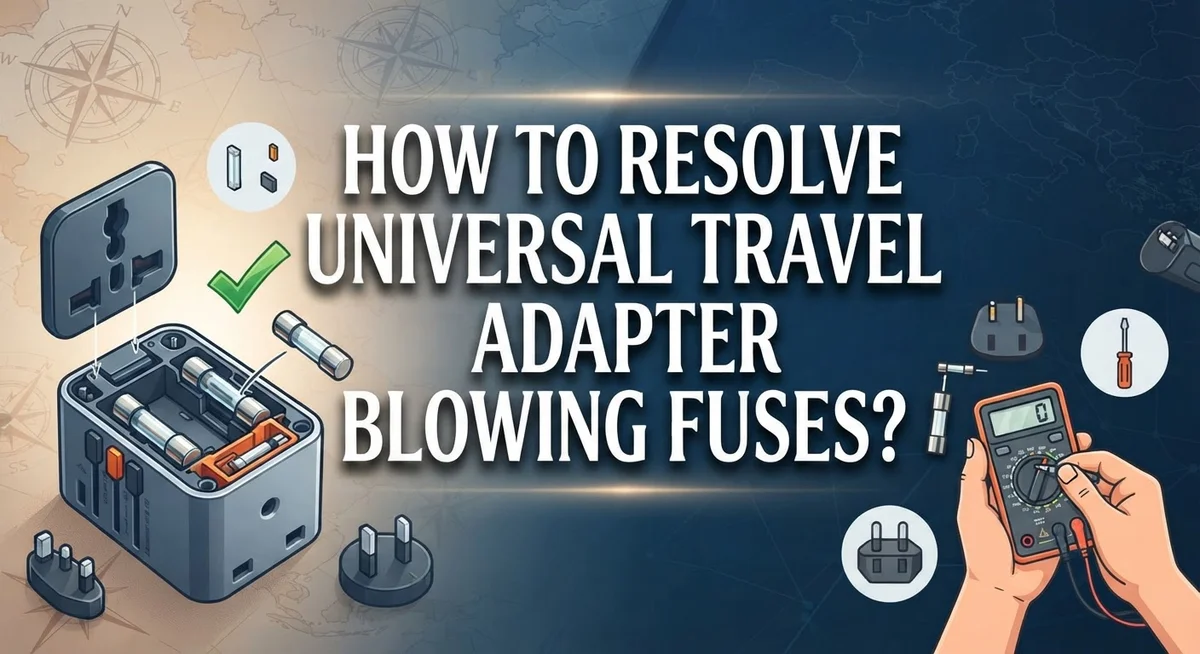
How To Safely Replace a Blown Fuse in a Universal Travel Adapter
A blown fuse in your universal travel adapter requires careful replacement. The process is simple, but precision matters because you must install the exact same rated fuse.
Start by locating the fuse holder. Most adapters have a small compartment on the bottom or side. Some fuse holders slide out with gentle prying using a flat object like a coin or small screwdriver. Others have a cover you turn counterclockwise about 45 degrees to access the fuse inside.
Handle the old fuse carefully. Once you remove it, examine the rating printed on the fuse body. You will see a number followed by “A” for amps, such as 10A or 13A. Write this number down or take a photo. This rating is critical because you must replace it with an identical one.
Insert the new fuse with the same rating. Slide it into the holder until it clicks or sits flush. Do not force it. The fuse should fit smoothly without excessive pressure.
Test your adapter immediately. Plug it into an outlet and connect a low power device like a phone charger. Let it run for a few minutes. If the fuse blows again within seconds, stop using the adapter completely.
Important safety note: never upgrade the fuse rating. If your adapter uses a 10A fuse, do not install a 13A fuse for convenience. A higher rated fuse removes your only protection against electrical fires and creates serious safety risks.
If the replacement fuse holds, gently wiggle your adapter after insertion to check the connection. Loose connections sometimes cause repeated failures. However, if the fuse blows a second time, the problem lies elsewhere in your setup. Investigate your cables and devices before attempting another replacement.
How To Identify the Root Cause Before Replacing the Fuse
A blown fuse is actually your adapter working as intended. It stops electrical current when something goes wrong. Your job is to find out what triggered it before you simply replace the fuse.
Start by examining the adapter itself. Look for burn marks, melting, or discoloration on the plastic casing. These signs mean excessive heat built up inside. Check the prongs for loose connections or corrosion. Wiggle the adapter gently in the outlet to see if the connection feels unstable. A poor connection forces the adapter to work harder and draw more current than it should.
Next, inspect the cable connected to your device. This is where most problems hide. Look for damaged insulation, exposed wires, or bent connectors. Melting or burn marks on the cable indicate a faulty wire, not an adapter problem. If you see this damage, the cable itself is drawing too much current and caused the fuse to blow.
Test your outlet next. Plug in a different device you know works safely. If that device causes no issues, your outlet is fine. If it also blows the fuse, your outlet has a serious electrical problem. Stop using it immediately and contact building maintenance.
Consider what you plugged in when the fuse blew. Were you running multiple high power devices simultaneously? Hair dryers, kettles, and heating tools pull enormous amounts of current. Adapters cannot handle several of these at once. One device at a time is the safest approach.
Check the voltage rating on both your adapter and your device. Mismatched voltages force the adapter to compensate. This creates excessive heat and current draw. Your adapter’s rating should match your device’s requirements.
If the fuse blows again after replacement, stop using that adapter immediately. Repeated failures mean your setup is fundamentally unsafe. Do not keep replacing fuses hoping the problem disappears.
The Limitations of Universal Travel Adapters You Need To Know
Universal travel adapters have real limitations that directly cause fuse blowouts. Understanding these constraints helps you use your adapter safely and avoid repeated failures.
Most universal adapters lack built in protection features. They simply change the plug shape to fit different outlets around the world. They do not regulate power or protect against electrical surges. This means your adapter depends entirely on the fuse to stop dangerous current flow. Once that fuse blows, you have lost your only safety layer.
Grounding is another major limitation. Many universal adapters have no grounding pin or connection. Grounding protects you from electrical shocks and helps safely direct excess power away from your devices. Without it, your adapter becomes more vulnerable to fuse failures when plugged into certain outlets.
Overload protection simply does not exist in most models. If you plug in a device that draws too much power, the adapter cannot automatically shut down. The fuse must handle the entire load alone. This is why high power appliances like hair dryers or kettles cause immediate fuse blowouts.
Voltage compatibility is another critical limitation. Universal adapters only change plug shape. They do not convert voltage. If you plug a 110V device into a 220V outlet using an adapter, the fuse blows instantly. Your device could also suffer permanent damage.
Connection quality matters too. Universal adapters often have loose internal connections. Poor contact between the plug and outlet creates heat and electrical resistance. This resistance causes the fuse to blow even when the wattage seems acceptable.
These limitations mean you cannot use universal adapters for every situation. Some devices and outlets simply do not work safely together. Recognizing these boundaries helps you avoid dangerous setups. Your adapter works best with low power devices like phone chargers and small electronics. Respect these limits to prevent repeated fuse failures and keep your devices safe.
Common Mistakes That Lead To Repeated Fuse Blowouts
Many people make the same mistakes when their universal adapter keeps blowing fuses. Understanding these errors helps you avoid repeated problems and use your adapter safely.
The most common mistake is upgrading the fuse rating for convenience. When a 10A fuse blows, some travelers install a 13A or 15A fuse instead. This seems like a quick fix, but it removes your only protection. The higher rated fuse allows more current to flow through the adapter. Your adapter can overheat or catch fire. Always replace with the exact same rating printed on the old fuse.
Another major error is continuing to use the adapter after repeated blowouts. If your fuse blows a second or third time after replacement, stop immediately. This pattern tells you something is seriously wrong. Your adapter cannot handle the electrical demand. Ignoring this warning puts your devices and yourself at risk.
People often overlook faulty cables as the real culprit. A damaged cable can cause excessive current draw that blows the fuse. Before blaming your adapter, inspect the cable carefully. Look for melting, cuts, or exposed wires. A melted cable indicates the problem lives in the cable, not the adapter itself.
Many travelers also fail to check connection quality. A loose adapter connection creates resistance and heat. After plugging in your adapter, gently wiggle it to ensure it sits firmly in the outlet. A poor connection forces the adapter to work harder and can trigger fuse failure.
Finally, people forget to identify what device caused the blowout. Plugging a high power appliance like a hair dryer into a universal adapter often causes problems. These devices draw too much current. Always know your device’s power requirements before connecting it through an adapter.
When To Stop Using Your Travel Adapter Entirely
A blown fuse after replacement signals a serious problem. Stop using your adapter immediately if this happens. This isn’t normal wear and tear anymore. Your adapter is telling you something is fundamentally wrong with your setup.
Repeated fuse blowouts mean your adapter cannot safely handle your electrical needs. The fuse exists to protect you from electrical fires and device damage. When it keeps failing, the protection system is overwhelmed. Continuing to use the adapter puts you at real risk.
Several situations demand you retire your adapter completely. If the same fuse blows within minutes of replacement, the adapter has failed. If you notice burning smells or visible damage inside the fuse compartment, discontinue use right away. If the adapter feels hot to the touch during normal use, stop plugging devices in.
Cable damage is often the culprit here. Melted plastic around the cable connection point means the cable itself is faulty, not just the adapter. Even if you replace the fuse, a damaged cable will blow it again repeatedly. Inspect both the cable and adapter connection point carefully before using anything again.
Different outlets in your location may cause problems too. Some outlets provide inconsistent power or voltage spikes. If your adapter works fine in one room but fails in another, the outlet itself may be defective. Test your adapter in multiple locations before deciding to keep using it.
Your safety matters more than saving money. Buying a replacement adapter costs far less than dealing with electrical injuries or property damage. Travel adapters are inexpensive tools, not permanent investments. When your adapter fails repeatedly, accept that it’s time for a new one.
Consider getting a converter instead of another adapter if you’re traveling to countries with different voltage standards. Converters offer better protection for sensitive electronics. Research your destination’s electrical system before your next trip to avoid these problems entirely.
Final Thoughts
A blown fuse is never just a minor inconvenience. It is always a symptom of a deeper problem that needs your attention before you plug anything in again.
The most important takeaway is this: replace the fuse only once with the exact same rating. If it blows again, stop using that setup entirely. Repeated failures mean something in your electrical chain is unsafe.
Always investigate the real cause before replacing anything. Check your cables for melting, fraying, or unusual heat. A damaged cable is often the true culprit, not the adapter itself.
Never upgrade your fuse rating to avoid blowouts. A higher-rated fuse removes the one safety barrier standing between your devices and serious electrical damage. This mistake can cause fires or permanently destroy your electronics.
Universal travel adapters only change plug shape. They do not convert voltage, and most offer zero overload protection. Understanding this limitation helps you use them safely and avoid overloading them in the first place.
Connection quality matters more than most travelers realize. A loose fit in a foreign outlet creates resistance and heat. Always gently wiggle your adapter after inserting it to confirm a solid connection.
If your destination uses a different voltage standard, consider using a proper voltage converter instead of relying on an adapter alone. This single step prevents the majority of fuse blowouts during international travel.
Know when to walk away from a failing adapter. Physical damage, repeated blowouts, and burning smells are all signs that your adapter has reached the end of its safe lifespan.
Your electrical safety while traveling depends on making smart, informed decisions. Treat every fuse blowout as a warning, investigate the cause, and never compromise on fuse ratings. These simple habits protect both your devices and your personal safety on every trip.
Frequently Asked Questions
Why does my universal adapter keep blowing fuses?
A blown fuse signals an electrical problem. The fuse is protecting your adapter from overload. Most universal adapters lack built in overload protection, so the fuse is your only safety feature.
Common causes include loose connections in the outlet, faulty cables, or devices that draw too much power. Check your cable first for melting or damage. Gently wiggle your adapter after inserting it to test the connection quality.
Can I replace a blown fuse with a higher rated one?
No. Never upgrade your fuse rating. Using a higher rated fuse removes your safety protection and creates fire and shock hazards.
Always replace the fuse with the exact same rating. Your adapter manual lists the correct fuse type. If you cannot find this information, contact the manufacturer before attempting replacement.
What should I do if the fuse blows again after replacement?
Stop using the adapter immediately. Repeated blowouts mean your adapter cannot safely handle your electrical setup.
Do not keep replacing fuses. Instead, investigate the real cause. Check your cables for damage. Test different outlets at your location. If problems continue, the adapter is unsafe and you should retire it.
Is a blown fuse just normal wear and tear?
No. A blown fuse is a warning sign, not routine maintenance. One blown fuse occasionally is manageable. Multiple blowouts in short periods indicate a serious problem.
Your adapter may be incompatible with local outlets or voltage standards. Your device may draw too much power. The cable may be damaged. Whatever the cause, repeated failures mean you need a different solution.
How do I know if my cable is the real problem?
Inspect your cable closely for visible damage. Look for melting, cracks, or exposed wires. Melting specifically indicates a cable problem, not an adapter failure.
Test your adapter with different devices and outlets. If the fuse only blows with one specific cable or device, that cable or device is the culprit. Replace the faulty cable before continuing use.

Hi, I’m Siya — the founder and writer behind Craftifyy.com. I’m a tech enthusiast who loves reviewing gadgets, comparing products, and helping people make smarter buying decisions. Got a question? Feel free to reach out!